
Meet the Florist:
Caroline Ruggaber
30 September 2026
Meet the Florist:
Caroline Ruggaber
30 September 2026
Q: You grew up in the Black Forest and ended up making floral installations for Hermès and Cartier. At what point did you realize this was the thing you wanted to build your life around?
A: I knew early on that I wanted to work with flowers and build a life around creativity. More than anything, my goal was to have the freedom to create and to develop my own visual language. To then have that work recognised and supported by houses like Hermès and Cartier is an incredible honour - and, of course, a dream come true. But the real privilege is being able to keep creating, experimenting and finding my own way of working with flowers.


Q: You often work with only one or two types of flowers. What does that restraint give you that abundance can’t?
A: When many small, similar elements come together, they start to create a new texture and become something larger than the individual flower. I’m very interested in that transformation—how repetition can turn something delicate and familiar into a completely new form.
Q: You work with fresh flowers, creating temporary sculptures. How do you feel about the fact that, as you're making them, you already know they won't exist for long?
A: Their temporary nature is what makes them feel so precious to me. They only exist in that exact form for a short moment, which creates a kind of luxury - The luxury of something that cannot be kept or repeated in exactly the same way.
“Knowing that it will disappear makes you look at it differently and appreciate its presence more intensely.”


Q: When working with flowers, do you focus only on their visual qualities, or are their scents also important to you and part of your creative decision-making process?
A: My approach is mainly visual, so shape, color, and texture guide my decisions. But scent is definitely part of the experience. I like that flowers can affect a space in ways that go beyond what you see. Sometimes the scent adds another layer to the work, making it feel more immersive and creating a stronger memory of that particular moment.


Q: Berlin is not exactly a city known for flowers. How has living here shaped what you make?
A: Living in Berlin has definitely shaped how I see beauty. I'm drawn to the friction between something delicate and organic and this city's unfinished, imperfect character. Berlin has taught me to value things that aren't polished or flawless — and that naturally finds its way into my work.


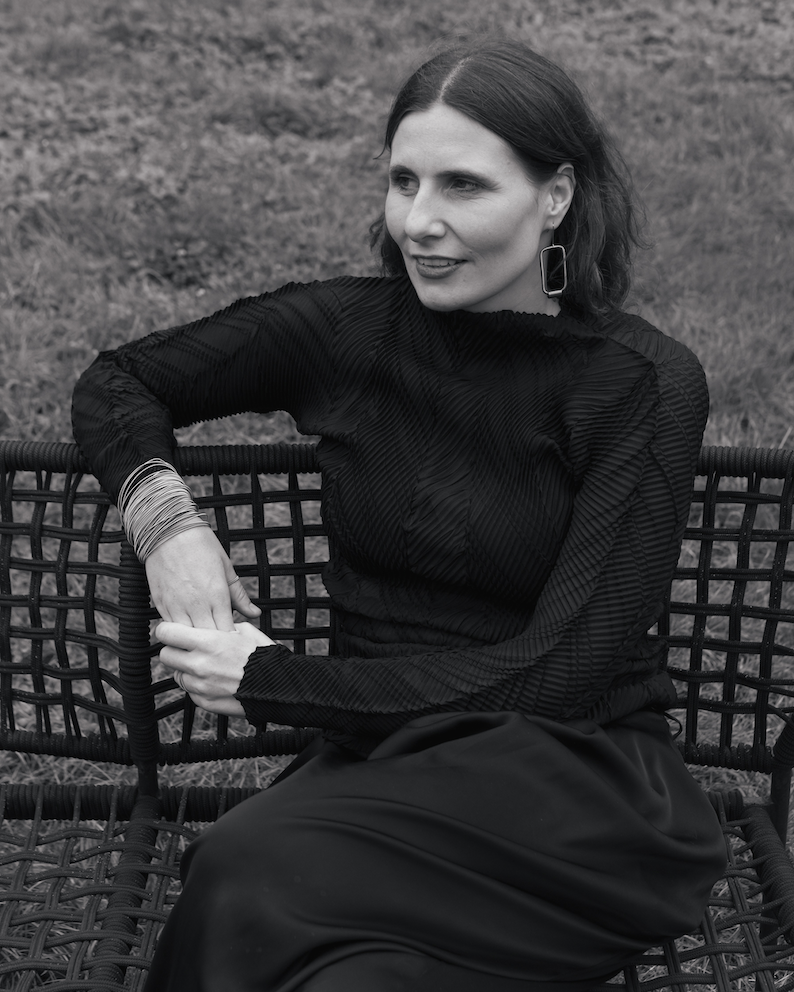
Q: Where do you go in Berlin when you want to switch off?
A: Honestly, it's the surroundings of my studio. It's on a former industrial site right by the water, with a big green field in front of it, right next to Reethaus Berlin. That mix of raw, industrial surroundings and the nature around it sometimes feels like countryside — even though it's still Berlin.
READ MORE

Berlin Art Week with Juliet Kothe

Irving Ramó
His visual language, shaped by an Air Force upbringing and fascination with machines

Daniel Hölzl
On materials, aviation, and Tempelhofer Feld as a source of an ongoing inspiration

C/O Berlin
Presents Carrie Mae Weems: The Heart of the Matter