
Art
Thomas Schulte
2 October 2026
Art
Thomas Schulte
2 October 2026
Q: You opened one of the first galleries in Berlin after reunification, with Rebecca Horn's show in April 1991. What was Berlin like then, and what did you see that made you leave New York for it?
A: I left New York for Berlin because I saw a chance to help build a new and international art scene in a city that had become increasingly self-centered, provincial, and overly subsidized.

Katharina Sieverding, Life-Death. Image: GRAYSC

David L. Johnson, Nachtruhe. Image: GRAYSC
Q: Allan McCollum has been with the gallery since the very first day in 1991, and you are now celebrating your 35th anniversary together. What does a relationship between a gallerist and an artist look like over 35 years?
A: My professional relationship with Allan McCollum actually goes back to 1987, and we will celebrate our 40th anniversary next year. Over the years, it has developed into a real partnership in which both sides have come to understand and appreciate each other better and better. I know very well how to communicate with Allan, when to respect his position, and when to challenge him.
Q: For Berlin Art Week you are presenting Life–Death by Katharina Sieverding, work that confronts power, identity, and mortality at a monumental scale. What made this the right moment for this show?
A: Katharina Sieverding’s work has been a mirror of its time from the very beginning, and many of her early works from 1969 and before are still unbelievably contemporary in their approach. I love to show how Katharina, as a young woman artist, was able to formulate works that were spot-on at the time and have not aged a bit since.
"She has been able to maintain this extraordinary level throughout her career, which is a phenomenal achievement."

Anna Wasilewski Courtesy of Galerie Thomas Schulte. Image: GRAYSC

Image: GRAYSC

Katharina Sieverding, Life-Death. Image: GRAYSC
Q: Galleries across the world are closing. What is actually happening, and is it a crisis or a correction?
A: This crisis is certainly a correction of a system that has known almost uninterrupted growth, with very few setbacks, since I opened the gallery in 1991. There are many external factors that have harmed the market for contemporary galleries, including the pandemic in 2020 and the current destabilizing political developments originating in the USA.
Q: If you could start one global conversation tomorrow, what would it be about?
A: It should be about the role of powerful special interest groups that manipulate our world to their advantage and the mechanisms they use to do so.

Anna Wasilewski Courtesy of Galerie Thomas Schulte. Image: GRAYSC

Katharina Sieverding, Life-Death. Image: GRAYSC
Q: What is art for?
A: Art, when it is very good, feels and sees what is coming. We can carefully try to understand this. It is not, however, necessarily the art that curators and collectors around the world promote to their own advantage.

David L. Johnson, Nachtruhe. Image: GRAYSC

Kerstin Brätsch,Die Sein: Para Psychics Expanded (Excerpt). Image: GRAYSC
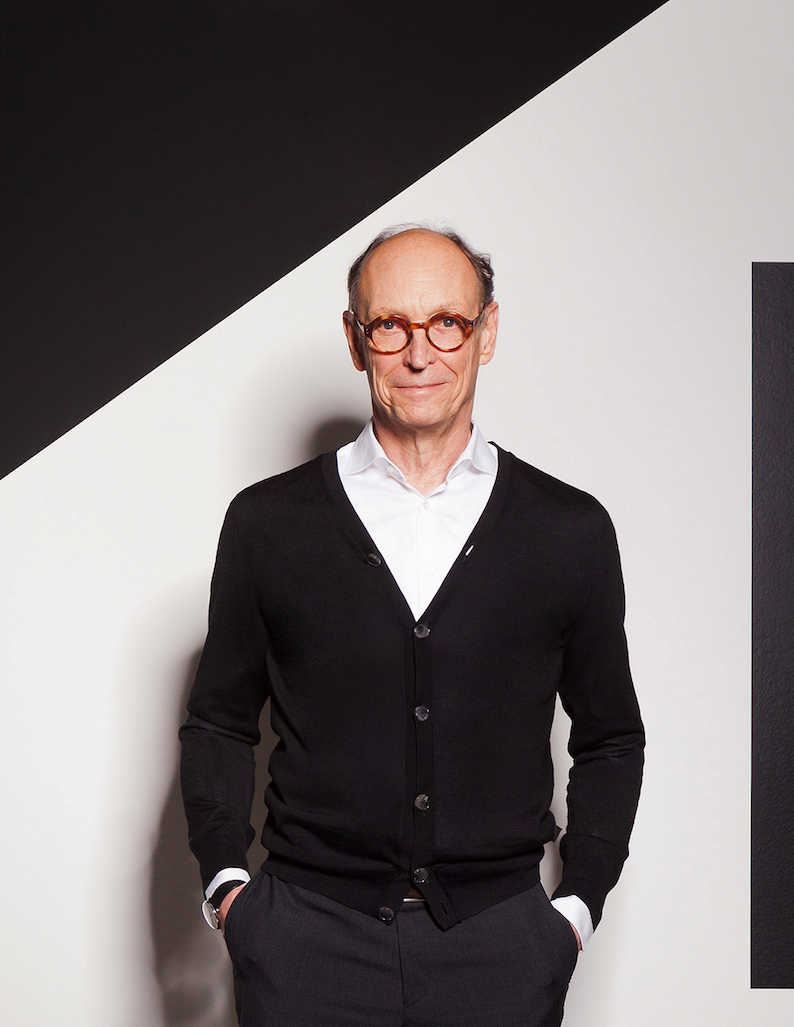
Anna Wasilewski Courtesy of Galerie Thomas Schulte. Image: GRAYSC
READ MORE

Andreas Kurkowitz
From mastering blonde and developing hair colour to embracing individuality over trends

Dafni Krazoudi
On the body, identity, and transformation through performance and movement

Yont Studio
On raw aesthetics, queer perspectives, and the space between art, architecture, and design

Sofiia Stepanova
Painting between figuration and abstraction, exploring uncertainty, intuition, materiality, and the emotional traces of place