
Architecture
Thilo Reich
18 November 2026
Architecture
Thilo Reich
18 November 2026
Q: Why are you so drawn to ordinary urban materials such as brick, concrete, tiles, and construction remnants?
A: I’m fascinated by the materials and structures that make up our everyday surroundings, particularly those that have been shaped over long periods of time. What interests me is not just the material itself, but also the traces it carries — traces of use, weathering, repair and cultural influences. These surfaces tell the story of how a place has been shaped over time, revealing a complexity that we often overlook in everyday life.
I see them as a kind of urban tissue, where individual fragments come together to form something larger. For me, these accumulated layers are more than just physical structures; they hold traces of human presence, cultural influences and the constant transformation of the built environment. Working with these materials is also a poetic exploration of identity, impermanence and material memory.
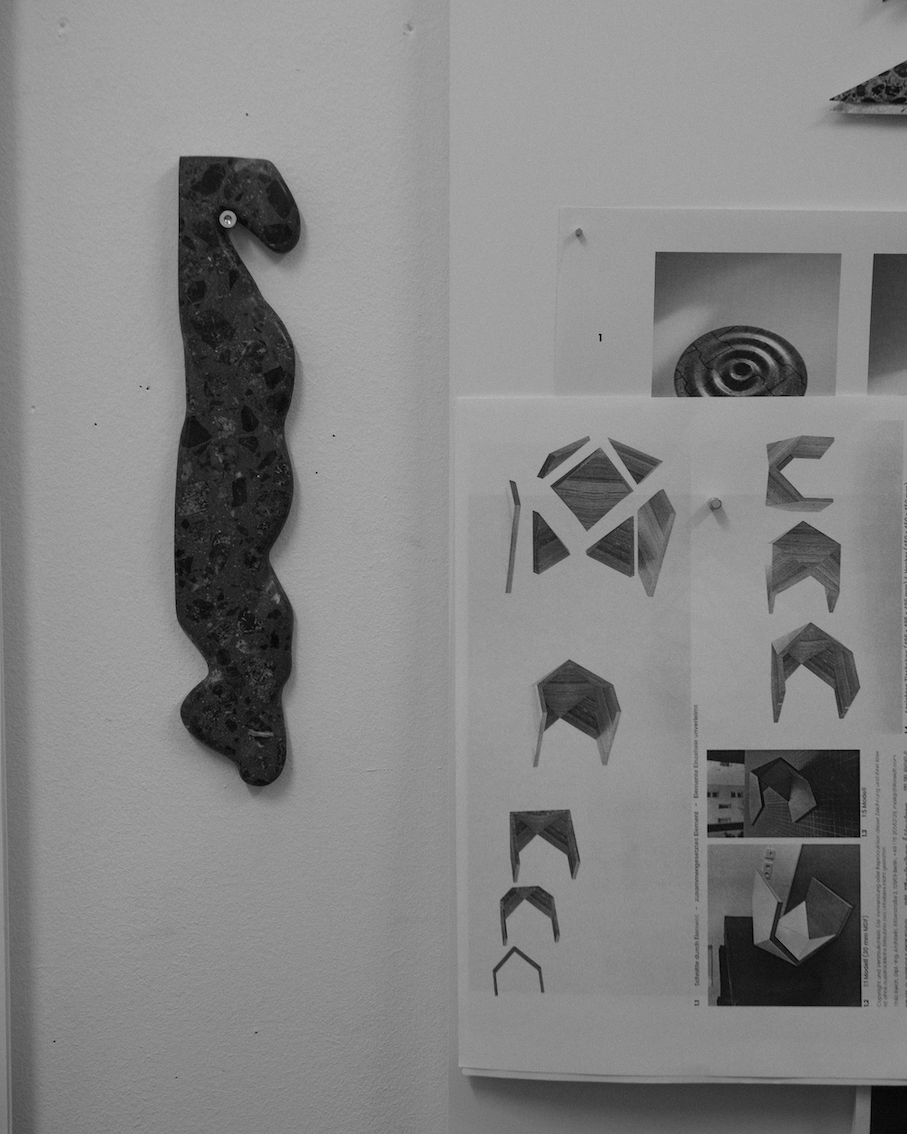

Q: What do you see in these everyday urban materials that we usually overlook?
A: I think we tend to see urban surfaces mainly in terms of their function. We walk over paving stones, pass concrete walls and barely notice the structures beneath our feet. Yet materials and surfaces are an important part of a place’s sensory identity. We experience them through our senses, often without even realising it, and they shape how we experience a place and how we remember it.
I also think of urban surfaces as a kind of skin covering the city. Cracks, joints, repairs and transitions become inscriptions of time, revealing how a place has been shaped by use, change and human presence. These details tell stories about a place that might otherwise remain unnoticed.
I’m interested in that moment when we begin to see something familiar in a new way — when a surface we would normally overlook suddenly reveals its own visual language and begins to tell a story.
"It’s about shifting our perspective and recognising that even the most ordinary parts of our surroundings can hold layers of meaning."


Q: How does a project begin for you? Is it a photograph, a found object, a drawing, a conversation, or sometimes simply a coincidence?
A: A project usually begins with a place and a feeling I associate with it. Something catches my attention — a particular surface, a pattern, a structure or the way different materials meet. The places I work with often have personal or historical significance for me, and I’m drawn to the specific qualities that make each one unique.
I often try to capture a particular moment, even though I know that moment is part of an ongoing process of change. An imprint preserves the physical state of a surface at a particular point in time. While the place itself continues to evolve, the imprint allows that fleeting moment to exist in a new material form.
Through moulding, drawing, digital modelling and material experiments, I explore the qualities of these surfaces and translate them into a new context. The process is rarely linear. I usually have a clear starting point, but the final form develops through a dialogue between the original material, the technical process and the unexpected possibilities that emerge along the way. I’m interested in finding a balance between intention and chance, between what I can control and what the material reveals through the process.
Q: Are there particular places or cities that you find especially “rich” in terms of materials?
A: I’m particularly drawn to places where different historical layers and traces of everyday life overlap. Areas undergoing change are often especially interesting because different periods, materials and interventions exist side by side. Repairs, extensions, worn surfaces and new constructions all leave their marks and become part of a larger, complex fabric.
Every place develops its own material language, shaped by its cultural, social and economic history. I’m interested in how this history becomes visible in surfaces and structures, and how different layers relate to one another. Sometimes these elements are in harmony; at other times, they reveal tensions or contradictions. Together, they tell a story about how a place has developed and how people have shaped it over time.
For me, the challenge is to learn to read this material language — to recognise the stories embedded in surfaces and discover connections that might not be immediately visible.


Q: Does Berlin have a strong influence on your practice? If so, what exactly do you take from the city?
A: Absolutely. Berlin has a very distinct material character, shaped by its complex history and constant transformation. Different architectural periods, rough and refined surfaces, temporary interventions, repairs and layers of construction all exist side by side. The city often feels like an ongoing accumulation of different moments in time, with each layer leaving its mark on what came before.
I’m interested in how these different elements come together to form a larger whole without losing their individual identities. This is closely connected to my own work, where I bring fragments of urban surfaces together to create new structures. Berlin has taught me to see a place not as something fixed, but as something constantly evolving — continuously shaped by time, use and human presence.
At the same time, I really value the freedom Berlin gives me in my work. The openness to different approaches, the people I meet here and the exchange of ideas around creative processes are all very inspiring. This atmosphere gives me the space to experiment, follow my own path and continue developing my practice.
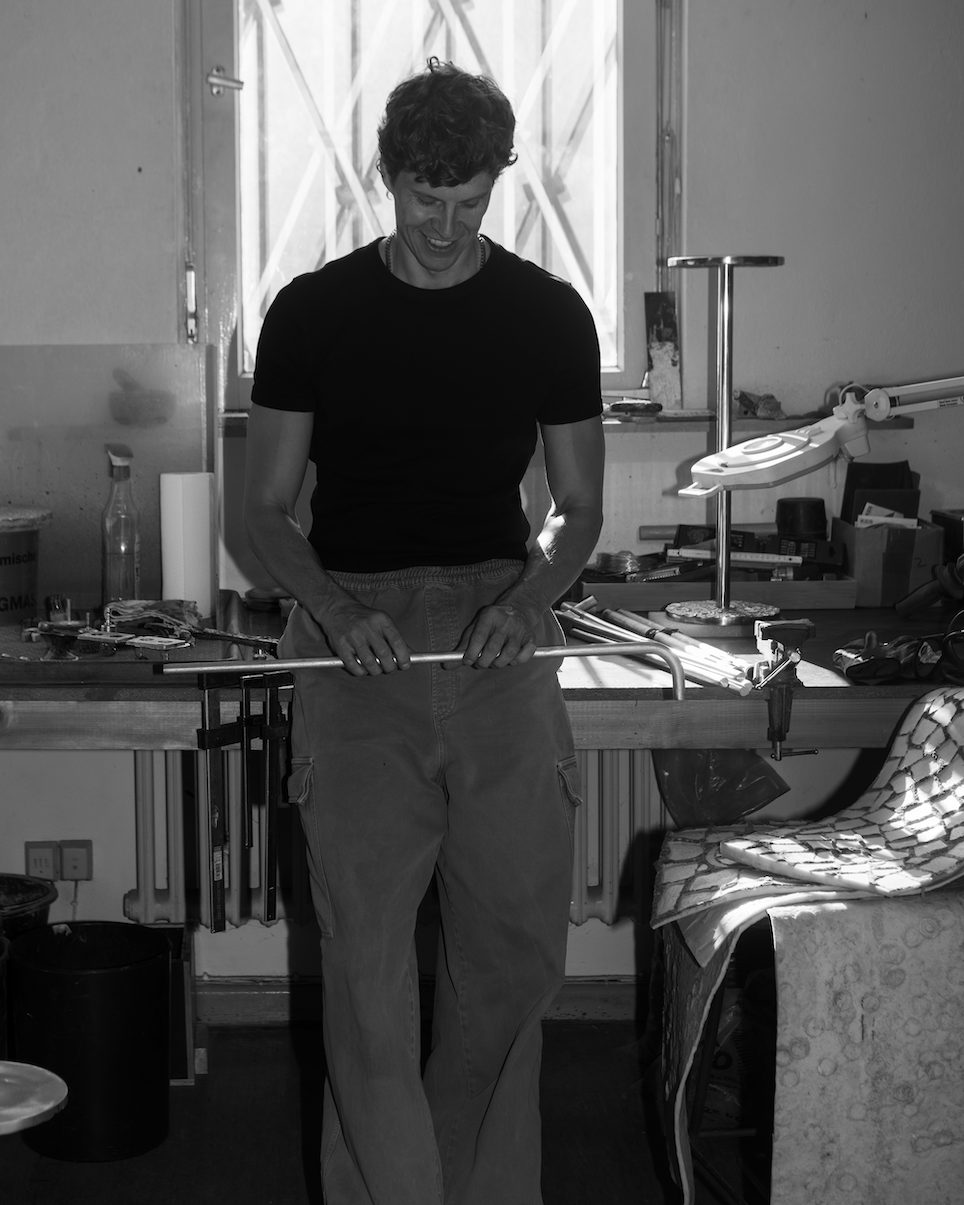


Q: If you had to capture Berlin through a single material, what would you choose and why?
A: I find it difficult to describe Berlin through a single material because the city is made up of so many different layers and contradictions. I would describe it more as an assemblage — a combination of materials, structures and historical layers that coexist and influence one another.
Its character emerges from the way these elements come together, sometimes complementing one another and sometimes creating contrasts. Depending on how you look at the city, a different picture emerges. Sometimes that picture even changes when you take a second look and notice details you missed the first time.
For me, this diversity and contradiction are what make Berlin so distinctive. The city cannot be reduced to a single, clearly defined identity. It remains multifaceted, constantly evolving and open to new interpretations. Perhaps that complexity is what fascinates me most about Berlin.
READ MORE

Fabian Stumm
On humor, the intimacy of storytelling, and the cinematic influence of Berlin

Helga Wretman
About art, performance, physicality and the line between reality and illusion

Thilo Reich
Exploring the hidden stories and memories embedded in the everyday textures of the city

VAUST
Design studio founded by David Kosock and Joern Scheipers